

 English
 中文简体
中文简体 Español
How To Choose The Right Outdoor Seating Set For Your Space
May 08, 2026
Outdoor spaces are often treated as an extension of living areas. A balcony, terrace, garden corner, or even a small patio can shift how a space feels once seating is added. The challenge is not only about style. It is about scale, comfort, weather exposure, and how people actually use the area.
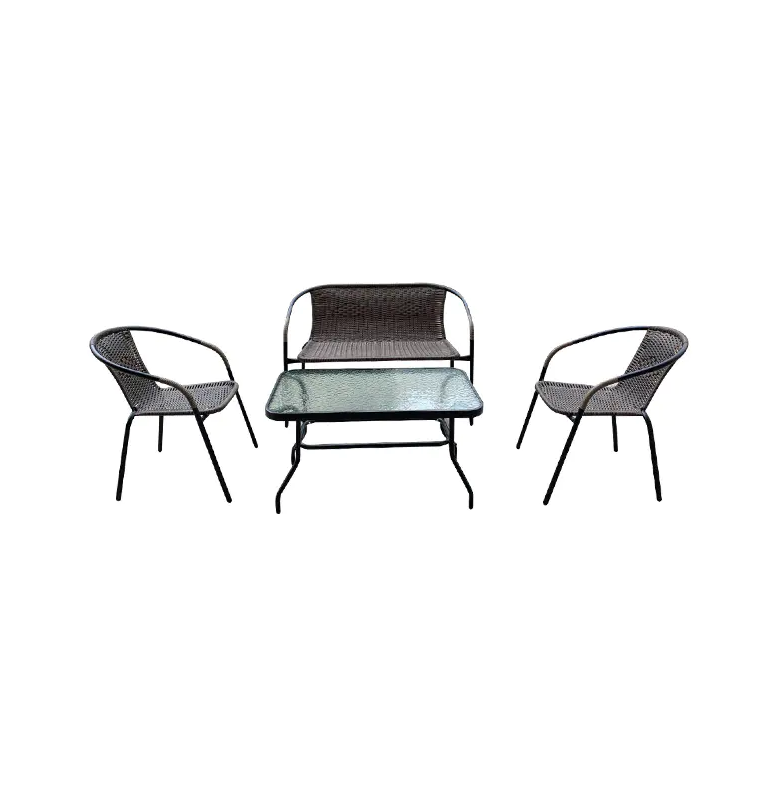
Choosing an outdoor seating set is rarely a quick decision. The space sets the limits, but daily habits shape the final choice.
What Kind Of Space Are You Working With?
The starting point is always the space itself. Not just size, but how it behaves during the day.
Some areas receive strong sunlight in the morning and stay shaded later. Others are exposed to wind or occasional rain. A few spaces are narrow and long, while others are open but irregular.
These conditions affect how seating will be used. A set that works well in one environment may feel out of place in another.
It helps to observe the space at different times. Morning, afternoon, and evening can feel surprisingly different.
How Much Room Is Actually Available?
Space is often smaller than it looks at first glance. Once movement paths are considered, the usable area becomes clearer.
An outdoor seating set should leave enough room to walk around without feeling restricted. Tight layouts may look neat in photos but feel less practical in daily use.
Instead of filling every corner, it is usually better to leave breathing space between furniture pieces. That makes the area feel more relaxed.
| Space Type | Seating Approach |
|---|---|
| Small balcony | Compact seating, lighter layout |
| Medium patio | Flexible arrangement |
| Large garden space | Zoned seating areas |
| Narrow outdoor strip | Linear furniture placement |
What Will The Space Be Used For?
Outdoor seating is not always used the same way. Some areas are for quiet rest. Others are for social gatherings or meals. A few spaces shift between different uses depending on the day.
A set designed for conversation feels different from one designed for dining. Seating depth, table height, and arrangement all play a role.
There is also the question of frequency. Occasional use allows more decorative choices. Daily use usually calls for something more practical and easy to maintain.
Thinking about use before style often leads to better decisions.
Which Materials Work Better Outdoors?
Outdoor environments are not controlled. Sunlight, moisture, dust, and temperature changes all affect furniture over time.
Materials respond differently to these conditions. Some feel stable in heat. Others perform better in humid or coastal areas. The choice is often a balance between appearance and durability.
Metal frames are commonly used for structure. They offer stability and a clean look. Wood brings a warmer tone but requires more attention over time. Synthetic materials often appear in modern designs because they stay consistent in changing weather.
Cushion fabrics also matter. Outdoor fabrics tend to focus on drying speed and resistance to fading. Comfort still matters, but behavior in changing weather becomes part of the decision.
How Important Is Comfort In Outdoor Seating?
Comfort is easy to underestimate at first. A set may look visually balanced but feel different when used for longer periods.
Seat depth, back support, and cushion softness all influence how the furniture feels over time. A quick sit feels different from sitting for an hour.
Outdoor seating often blends relaxation and social interaction. That means comfort cannot be too rigid or too soft. It usually sits somewhere in the middle.
Small details, like armrest height or seat angle, become noticeable during real use.
Does Style Influence Function?
Style is often the first thing people notice. Clean lines, natural tones, or modern shapes can define the atmosphere of a space.
But style also interacts with function. A low-profile design may look open but feel less supportive. A heavier design may feel stable but visually take more space.
Matching style with environment helps avoid visual imbalance. A compact balcony may feel crowded with oversized furniture. A large garden may feel empty with very minimal pieces.
Style works best when it supports the space rather than dominates it.
How Does Weather Exposure Change The Choice?
Outdoor furniture lives under constant environmental pressure. Sunlight can slowly affect color. Rain can influence structure. Wind can shift lightweight pieces.
This does not mean all outdoor seating needs heavy protection, but it does require awareness of exposure.
Some spaces are partially covered, which allows more material flexibility. Fully open areas usually require more weather-aware choices.
Even cushions and accessories need attention. Storage habits often matter as much as material selection.
Is Modular Furniture A Practical Option?
Modular seating has become more common in outdoor spaces. The idea is simple. Individual pieces can be rearranged depending on need.
This flexibility fits spaces that serve more than one purpose. A seating arrangement can shift from a conversation setup to a lounging layout without replacing furniture.
It also helps when space is irregular. Instead of forcing a fixed structure into a difficult layout, modular pieces adapt to the shape of the area.
The key is not complexity, but adaptability. Small adjustments can change how the space feels.
How Do You Balance Appearance And Daily Use?
Outdoor seating often sits between visual design and practical use. A space may look appealing in a still setting, but real life brings movement, weather changes, and daily wear.
Maintenance becomes part of the decision. Some materials are easier to clean. Others require occasional care but offer a different visual feel.
It is less about choosing between beauty and function, and more about how both can coexist without conflict.
A seating set that fits daily habits tends to stay in use longer, even if it is not the most visually striking option at first glance.
What Makes A Seating Set Feel "Right" For A Space?
There is no fixed formula. Two spaces of the same size can feel completely different depending on layout and light.
A seating set feels right when it does not interrupt movement, does not overwhelm the view, and feels natural to use without adjustment.
Sometimes it is about proportion. Sometimes it is about silence in design. A space that feels too crowded or too empty often signals a mismatch rather than a lack of furniture.The decision usually settles when the furniture feels like it belongs there, not placed there.

Add:No.16 Zhongxing Avenue ,Longshan Town ,Yongkang City, Zhejiang, China
Phone:+86-13858930745
Tel: +86-579-87556036
Fax:+86-579-87556037
Email: [email protected]
Email:[email protected]
Copyright © Yongkang Chenda Hardware Craft Factory.

Leisure Outdoor Furniture Factory