

 English
 中文简体
中文简体 Español
Are Stackable Rattan Chairs Safe for Daily Stacking Use
Jun 19, 2026
Stackable seating has become a popular solution for restaurants, cafés, event venues, patios, balconies, and residential outdoor spaces. A Promotion Stackable Rattan Chair combines the visual appeal of woven rattan with the space-saving advantages of stackable furniture. Despite these benefits, many buyers ask an important question: can these chairs withstand frequent stacking and unstacking without compromising safety or structural stability? Daily stacking places repeated pressure on chair frames, leg joints, seat supports, and protective contact points. Understanding how these components work together helps users evaluate whether a chair can maintain reliable performance over an extended service life.
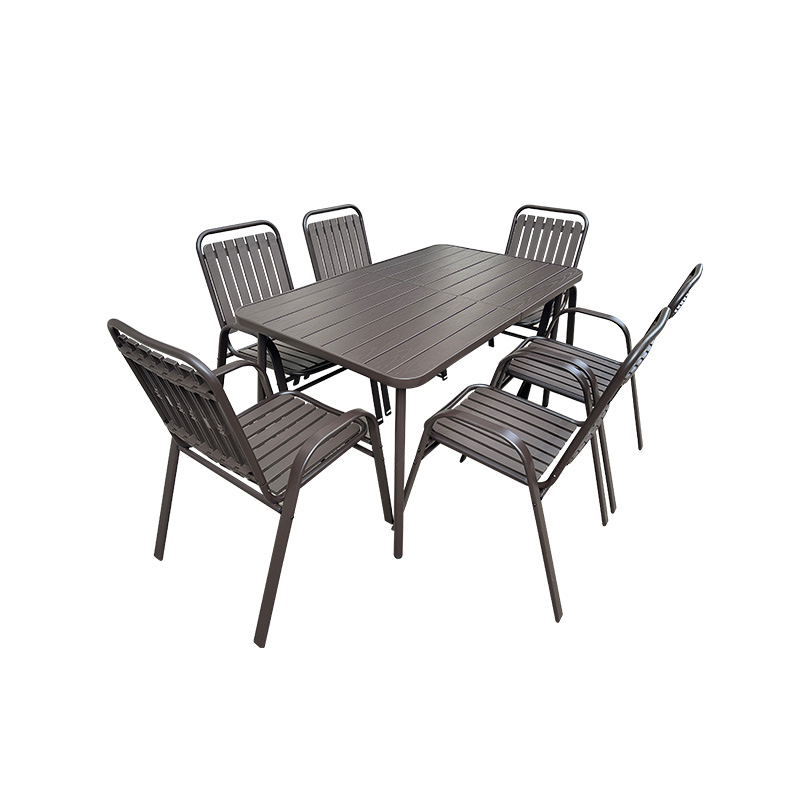
What Happens During Repeated Stacking?
Every stacking cycle introduces contact between chair frames. Although a single stacking action creates minimal stress, hundreds or thousands of cycles gradually affect structural components.
Areas That Experience the Highest Wear
- Chair leg contact points
- Seat frame intersections
- Protective stacking spacers
- Armrest support brackets
Commercial furniture guidelines note that stacking furniture is designed with dedicated contact points to prevent excessive pressure on load-bearing structures. Properly engineered stacking systems help preserve frame geometry during repeated use. A Promotion Stackable Rattan Chair with integrated stacking buffers generally experiences less frame abrasion than designs lacking dedicated separation components.
Frame Construction Plays a Major Role
The frame serves as the foundation of chair stability. Regardless of how attractive the woven surface appears, safety largely depends on the supporting structure beneath it.
Common Frame Materials
- Powder-coated steel tubing
- Aluminum alloy frames
- Galvanized steel structures
- Reinforced composite materials
Aluminum frames are frequently used in outdoor furniture because they offer corrosion resistance and lower weight. Steel frames provide greater rigidity and higher load-bearing capability, although they require adequate surface protection against environmental exposure. Typical tube diameters range from 22 mm to 32 mm, with wall thicknesses between 1.0 mm and 2.0 mm depending on application requirements.
Why Frame Geometry Matters
Stacking safety depends not only on material strength but also on structural design.
- Cross-braced legs improve rigidity
- Curved support members distribute weight more evenly
- Wider leg spacing improves balance
- Reinforced corners reduce deformation risk
A chair designed specifically for stacking typically incorporates these structural features from the beginning rather than adapting a standard chair design.
How Synthetic Rattan Handles Stacking Pressure
Modern stackable rattan chairs commonly use PE (polyethylene) rattan instead of natural rattan. Synthetic rattan offers several advantages for stacking applications because it combines flexibility with durability.
Characteristics of PE Rattan
- UV-resistant formulations available
- Moisture-resistant construction
- Flexible under moderate pressure
- Reduced cracking compared with natural fibers
The woven material itself rarely carries the full seating load. Instead, the internal frame supports the majority of the weight while the rattan surface contributes comfort and appearance. As a result, stacking pressure generally affects frame contact points more than the woven sections.
Can Stacking Cause Deformation?
Users often worry that stacked chairs may lose their shape over time. Deformation is possible, but several factors influence the outcome.
Conditions That Increase Deformation Risk
- Excessive stack height
- Uneven storage surfaces
- Continuous heavy loads placed on stacked chairs
- Poor frame welding quality
Many commercial furniture suppliers recommend limiting stack heights according to design specifications. Common recommendations range from 4 to 10 chairs per stack depending on frame design and material thickness. A Promotion Stackable Rattan Chair manufactured with reinforced frame joints generally maintains dimensional stability more effectively during frequent storage cycles.
Protective Components Often Overlooked
Several small components contribute significantly to stacking safety.
Stacking Buffers and Spacers
These elements create controlled separation between chairs.
- Reduce direct frame-to-frame contact
- Minimize surface scratches
- Protect powder-coated finishes
- Lower wear during transportation
Plastic spacers, rubber pads, and molded stacking guides are commonly used to maintain consistent spacing throughout stacked units. Without these protective components, repeated stacking can accelerate finish wear and create localized stress concentrations.
Weight Capacity and Daily Usage
Safety discussions frequently focus on stacking, yet seating performance remains equally important. Many commercial-grade stackable rattan chairs are engineered to support static loads ranging from 120 kg to 180 kg. Heavy-duty models may exceed these figures through reinforced frame construction.
Indicators of Reliable Load Performance
- Welded frame intersections
- Thicker support tubing
- Reinforced seat brackets
- Multi-point load distribution design
Load-bearing capability should remain stable regardless of whether chairs are frequently stacked, provided structural components remain undamaged.
Outdoor Storage and Stacking Considerations
Environmental conditions influence stacking safety over time. Outdoor furniture faces additional challenges from sunlight, moisture, temperature fluctuations, and airborne contaminants.
Factors Affecting Long-Term Performance
- UV exposure may gradually affect polymer flexibility
- Salt air can accelerate metal corrosion in coastal regions
- Standing water may affect poorly protected frames
- Temperature changes create expansion and contraction cycles
Protective coatings and weather-resistant materials help maintain structural integrity throughout seasonal use.
Signs That a Stackable Chair Remains Safe
Regular inspection provides valuable information about chair condition. Users can evaluate stability through several simple observations.
- Legs remain level on flat surfaces
- No visible frame distortion
- Woven material remains securely attached
- Stacking guides remain intact
- No unusual movement at welded joints
Consistent structural alignment typically indicates that the chair continues to perform as intended.
A Promotion Stackable Rattan Chair can be a safe and practical seating solution for daily stacking applications, provided it incorporates a durable frame, quality weaving materials, reinforced support structures, and proper stacking protection components. Long-term reliability depends less on the stacking process itself and more on the engineering behind the chair. Thoughtful frame design, controlled stack heights, protective spacers, and durable materials work together to preserve stability throughout repeated use. These characteristics allow stackable rattan chairs to serve efficiently in both commercial and residential environments while maintaining their structural performance and visual appeal.

Add:No.16 Zhongxing Avenue ,Longshan Town ,Yongkang City, Zhejiang, China
Phone:+86-13858930745
Tel: +86-579-87556036
Fax:+86-579-87556037
Email: [email protected]
Email:[email protected]
Copyright © Yongkang Chenda Hardware Craft Factory.

Leisure Outdoor Furniture Factory