

 English
 中文简体
中文简体 Español
What Are The Advantages Of Glass Seating Set Compared To Wood Or Metal
May 15, 2026
Furniture materials often shape the feeling of a space more than people notice at first. A seating set can look simple in a catalog, but once placed in a real environment, the material starts to influence light, mood, and even how large or small a space feels.
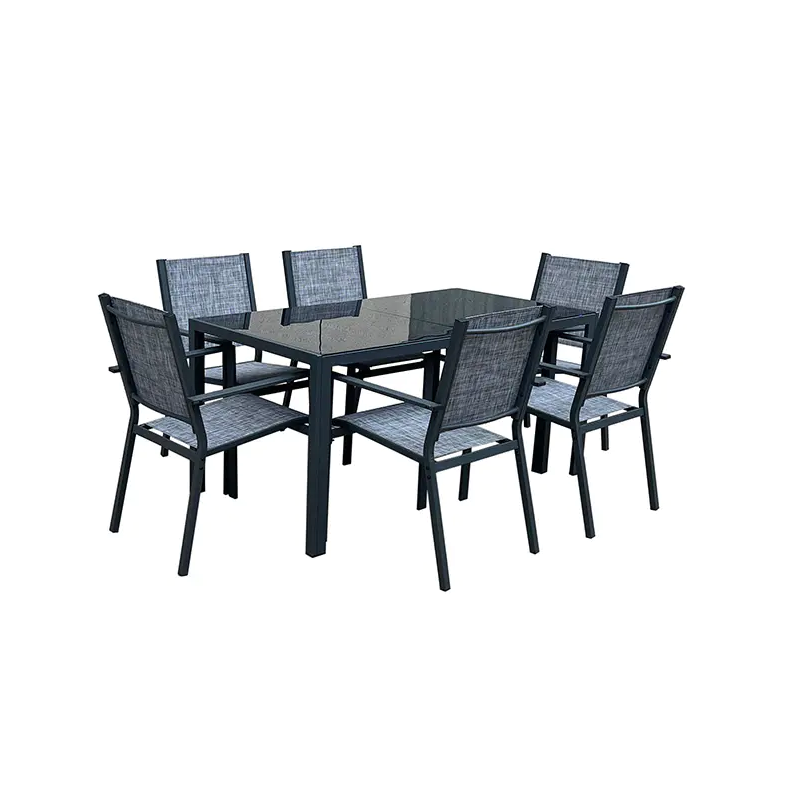
Glass seating sets have been showing up more often in both indoor and outdoor settings. Not because they replace wood or metal, but because they change how a space is visually experienced.
Why Does Glass Change The Way A Space Feels?
Glass behaves differently from other materials. It does not block light in a solid way. Instead, it lets light pass, reflect, or soften depending on the angle.
In practical terms, this makes a space feel less crowded. Even when furniture is present, the eye does not hit a heavy surface immediately. There is a kind of visual pause.
Wood tends to create a grounded, warm atmosphere. Metal feels structured and firm. Glass sits somewhere lighter in between, almost like it reduces visual weight without removing function.
In smaller balconies or narrow patios, that difference becomes easier to notice.
Is Glass Easier To Live With Than Wood Or Metal?
Maintenance is where people often compare materials in a very direct way.
Wood usually needs occasional care to keep its surface stable. Metal can handle strength well, but may react to long exposure depending on conditions. Glass is simpler in one sense: it does not absorb or change structure easily.
Most of the time, it just needs cleaning to remove marks or dust. There is no grain direction or coating to manage.
Still, glass shows smudges more clearly. That means it can look "less clean" faster, even if nothing is wrong with it. So the effort is lighter, but the visual upkeep feels more frequent.
Why Do Designers Use Glass In Modern Seating Sets?
There is a quiet shift in design thinking. Furniture is not only about filling space anymore. It is also about how much it interrupts space.
Glass helps reduce that interruption. It allows surroundings to stay visible through or around the furniture.
Wood creates a strong presence. Metal adds structure and contrast. Glass does something softer. It steps back visually.
That is why it often appears in tabletops or surface layers instead of full structural frames. It works better as a visual element than a load-bearing identity.
How Does Glass Compare In Strength And Everyday Use?
Durability depends on how and where the material is used.
Wood can handle everyday contact but reacts to environment over time. Metal feels strong and steady, though surface wear can still appear. Glass does not change shape or warp, but it is more sensitive to impact.
That is why it is usually placed in controlled positions within seating sets. Not as the main supporting structure, but as a surface that stays stable when used correctly.
In normal daily use, the behavior feels predictable. It does not shift slowly like wood or show gradual surface changes like metal. It either stays clear or shows marks that can be cleaned.
Does Glass Work Better Indoors Or Outdoors?
Both environments work, but the feeling changes.
Outdoors, glass interacts strongly with sunlight. It reflects surroundings and changes appearance throughout the day. At times it blends in. At times it stands out.
Wood feels more natural in outdoor spaces because it connects with plants and earth tones. Metal gives contrast and structure. Glass feels more neutral, almost like it is adjusting to the environment rather than defining it.
Indoors, the effect is calmer. Light is more controlled, so the reflective quality becomes softer.
What About Comfort In Glass Seating Sets?
Glass itself does not affect sitting comfort directly. The comfort comes from cushions, chairs, and proportions.
But there is another layer that people notice. The visual lightness of glass can make a seating area feel less closed in.
A wooden set might feel cozy but enclosed. A metal set might feel firm and defined. Glass creates a sense of openness around the seating area.
That difference is subtle, but it changes how long people tend to stay in the space.
How Do Glass, Wood, And Metal Feel Together?
In many seating sets today, materials are not used alone. They are mixed.
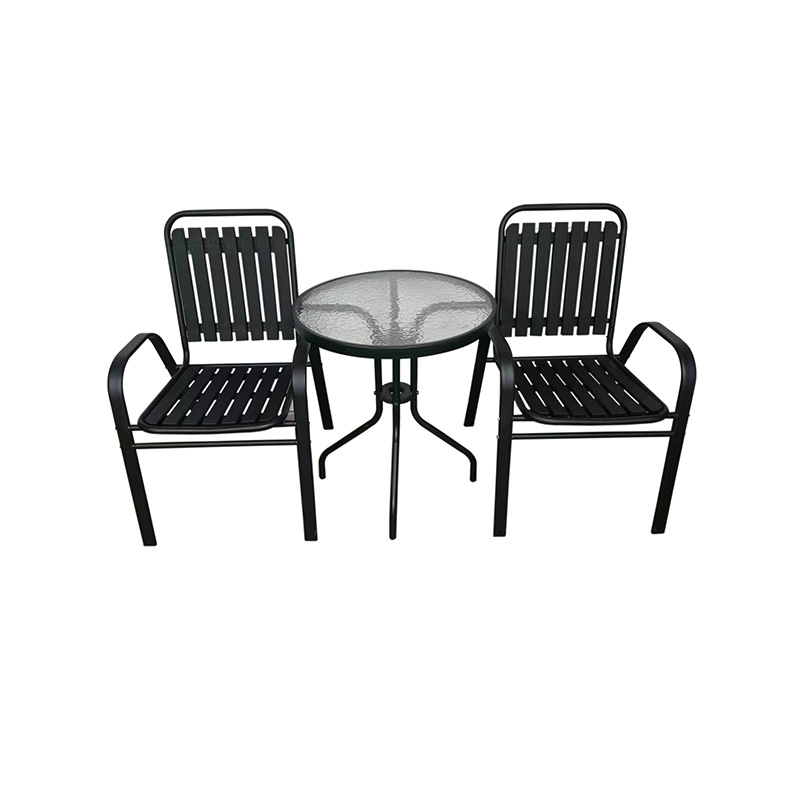
Glass often sits on top of metal frames. Wood might appear in armrests or accents. Metal gives structure, wood adds warmth, and glass reduces visual density.
Each material plays a role rather than competing.
When balanced well, glass softens the overall appearance so the furniture does not feel heavy in the room or outdoor area.
Is Glass Practical For Small Spaces?
Small spaces react strongly to visual weight. Even a few large objects can make an area feel tight.
Glass helps in this situation because it does not block sight lines. The space feels more continuous, even when furniture is placed inside it.
Instead of dividing the area, it allows light and view to pass through.
Wood and metal can still work in small spaces, but they tend to define boundaries more clearly. Glass keeps those boundaries softer.
What Changes The Way Glass Seating Sets Age?
All materials change slightly over time, just in different ways.
Wood may darken or shift tone depending on exposure. Metal can develop surface patterns from wear. Glass stays visually stable, but it shows marks more easily.
So the change is not in structure, but in appearance between cleaning cycles.
That makes glass feel consistent in shape, even if its surface needs more attention to stay visually clean.
Why Do People Choose Glass Despite Its Sensitivity?
It usually comes down to balance.
Glass brings a lighter visual presence. It does not compete with surrounding décor or scenery. It allows other elements to stay visible.
For spaces where design openness matters, that quality becomes more important than toughness alone.
Wood and metal are reliable in different ways, but glass offers something different: a quieter presence inside the space.
What Makes Glass Seating Sets Feel Different Overall?
It is not one feature that defines seating sets. It is the combination of small effects.
Less visual heaviness. More light interaction. A calmer background role in the space.
When placed next to wood or metal furniture, the difference becomes clearer. Glass does not try to dominate. It simply adjusts to what is around it.

Add:No.16 Zhongxing Avenue ,Longshan Town ,Yongkang City, Zhejiang, China
Phone:+86-13858930745
Tel: +86-579-87556036
Fax:+86-579-87556037
Email: [email protected]
Email:[email protected]
Copyright © Yongkang Chenda Hardware Craft Factory.

Leisure Outdoor Furniture Factory